Flooded Car in Norfolk? What to Do Before You Try to Start It
If your car sat in flood water or you drove through flood water in Norfolk, don’t try to start it. Turning the key can pull water into the engine or short out wet electrical parts and turn a repairable car into a much bigger problem. Get yourself safe, take photos, call your insurance company, and have the car towed on a flatbed to a shop that can inspect it.
Quick answer
- Don’t start the car, and don’t crank it “just to see.”
- If you’re in the car and water is rising, get out and move to higher ground. Call emergency services if anyone is in danger.
- Take photos of the water level, the outside and the inside of the car.
- Call your insurance company to start a claim and ask where they want the car to go.
- Have the car moved on a flatbed so the wheels and drivetrain don’t turn.
- Saltwater from tidal flooding is harder on a car than rainwater, so mention it to your insurer and mechanic.
Why you shouldn’t start a flooded car
Starting a flooded car is the one move most likely to make things worse.
If water got into the air intake, the engine can pull it into the cylinders when it turns over. Water doesn’t compress the way air and fuel do, so the engine can lock up. Mechanics call this hydrolock, and it can bend internal parts that are expensive to fix.
Water and electricity are a bad mix, too. Modern cars are full of wiring, sensors, computers and connectors, many of them low in the car or under the seats and carpet. Powering up a wet system can short those parts out. Damage from water can also show up later as corrosion, so a car that seems fine today may act up weeks from now.
Water can also get into the fuel, the transmission and the oil. A mechanic can check those before anything turns over. That’s why the safest plan is to leave the key alone and let a shop look first.
How to tell how bad the flooding was
You can get a rough idea of the damage without starting anything. Look for these signs:
- A water line. Check the door panels, seats and carpet for a line of dirt, mud or debris. That shows how high the water got.
- Wet carpet or padding. Press on the carpet and check under the floor mats. Padding can stay soaked even when the top looks dry.
- Water under the dash. If the line is at or above the bottom of the dashboard, a lot of the electrical system may have been under water.
- A musty or moldy smell. This often means water sat inside the car for a while.
- Mud or silt in the trunk, the spare tire well, the glove box or the engine bay.
- Fogging inside the lights or moisture inside the gauge cluster.
If the car was already running when water got in and it stalled, or warning lights came on, tell your mechanic. A car that stalled in deep water is the one you especially don’t want to restart.
As a general rule, the higher the water went, the more serious the damage is likely to be. Only a qualified mechanic can tell you for sure.
Step-by-step: what to do with a flooded car
1. Put safety first. If water is still rising or moving, don’t go back to the car. Stay out of flood water, which can hide holes, debris and downed power lines. If anyone is trapped or hurt, call emergency services.
2. Don’t start it. Don’t turn the key to the run position, and don’t push the start button. Leave it off until a mechanic checks it.
3. Take photos and video. Once it’s safe, photograph the water around the car, the water line inside, the carpet, the dash, the engine bay and the trunk. Get the street and surroundings in a few shots, too. These help with an insurance claim.
4. Call your insurance company. Report the flooding, ask how they want you to proceed, and ask where they’d like the car taken. Write down your claim number.
5. Disconnect the battery only if you know how and it’s safe. Some mechanics suggest disconnecting the battery to help protect the electrical system. Only do this if the water is gone, you know how to do it safely, and you’re comfortable working on a car. If you’re unsure, leave it alone and let the shop handle it.
6. Start drying the inside. If it’s safe to open the doors, let air in, take out wet floor mats and remove personal items. Don’t try to power any seats, windows or accessories.
7. Arrange a flatbed tow to your mechanic, dealership or the shop your insurer chooses.
If you were in a crash on a flooded road, our guide on what to do after a car accident in Virginia covers the next steps.
Saltwater vs. rainwater flooding in Hampton Roads
Not all flood water is the same. In Hampton Roads, a lot of flooding comes from the tide, not just from rain, and that matters for your car.
Tidal flooding, including the “sunny day” flooding that comes with king tides, pushes salty water from the rivers and the bay up into low-lying streets. Saltwater is much more corrosive than rainwater. It can eat away at metal, brake lines, wiring and electrical connectors over time, even after the car dries out.
Rainwater flooding from heavy storms is still a problem. It can carry mud, oil and debris, and it can still flood an engine or soak the electrical system. But salt adds a long-term corrosion risk on top of the water damage.
If your car sat in tidal water, tell your insurer and your mechanic. It can affect how the car should be cleaned, inspected and repaired.
Why a flooded car should go on a flatbed
A flooded car shouldn’t be driven, and in many cases it shouldn’t be towed with its wheels on the ground either.
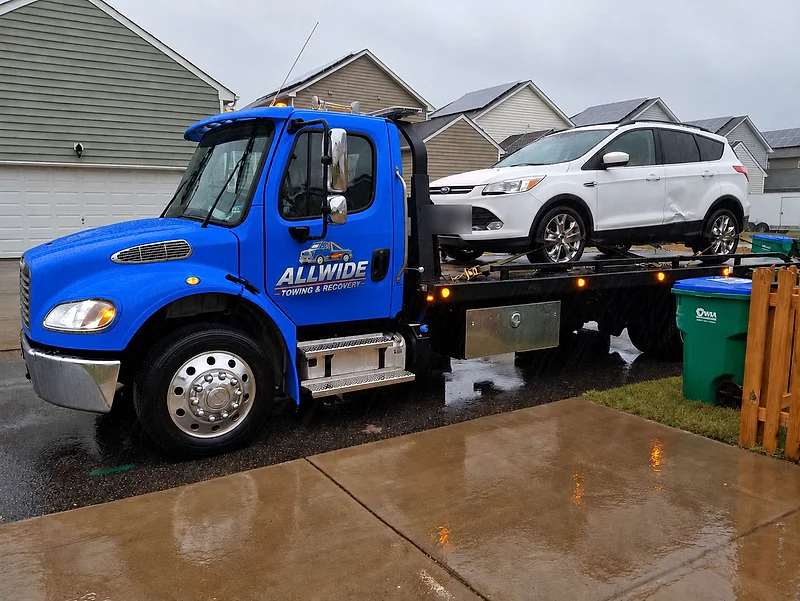
With a flatbed tow, the whole vehicle rides on the bed of the truck. The wheels don’t turn, so the transmission, axles and drivetrain don’t move while they may still have water in them. That helps avoid adding damage on the way to the shop.
A flatbed is also a good fit for all-wheel-drive vehicles and for cars that may have trouble shifting into neutral after a flood. Our team uses flatbed trucks for cars, SUVs, pickups and vans. You can read more about our general towing service, too.
When you call, tell us the car was in flood water and roughly how deep it got. That helps us plan the pickup.
Where should you tow a flooded car?
The right place depends on your situation:
- Your regular mechanic, if you trust them and they handle water damage.
- The dealership, especially if the car is newer or still under warranty.
- A body shop, if there’s also body damage.
- Wherever your insurance company directs you. Many insurers have a preferred shop or an inspection location. Check with them before you schedule the tow so the car only has to move once.
If you’re not sure yet, ask your insurer first. It can save time and a second trip.
Hurricane season and king tide tips for Norfolk drivers
Norfolk and the rest of Hampton Roads are known for recurrent flooding. Low-lying streets can flood during heavy rain, nor’easters, hurricane season (June through November), and even on clear days during high tides. Parts of Downtown Norfolk and the area around The Hague in Ghent are among the spots people often point to.
A little planning can keep your car out of the water:
- Move your car to higher ground before a big storm or a predicted high tide. A parking garage or higher street can make a big difference.
- Check local alerts. Watch for flood and weather alerts from the City of Norfolk, and check VDOT’s 511 service for road conditions and closures before you head out.
- Know your low spots. Notice which streets near your home and work tend to flood, and plan another route.
- Turn around, don’t drown. Never drive into a flooded road. You can’t tell how deep the water is or whether the road under it is washed out. Safety agencies warn that even shallow moving water can make you lose control, and about a foot of moving water can float many cars.
- Keep important papers handy. Keep a copy of your insurance card and your insurer’s claims number in your phone.
If you live in Norfolk, see our Norfolk towing page. We also cover nearby cities like Virginia Beach and Hampton.
Buying a used car after a storm? Watch for flood damage
After big storms, flood-damaged cars can end up for sale, sometimes far from where they flooded. Before you buy, look for a musty smell, new carpet in an older car, rust in odd places like seat rails and under the dash, and silt in the trunk or spare tire well. Run a vehicle history report and have an independent mechanic inspect the car before you pay.
Frequently asked questions
Can I start my car after it was in flood water? It’s safer not to. Starting a car with water in the engine or electrical system can cause serious damage. Have a mechanic inspect it first.
Does insurance cover flood damage to a car? Often, comprehensive coverage on an auto policy covers flood damage, but every policy is different. Liability-only coverage generally doesn’t. Check your policy and call your insurance company to confirm what’s covered.
I drove through flood water and the car still runs. Is it okay? Maybe, but don’t assume. Watch for warning lights, strange noises, a wet carpet or a change in how it drives, and have a mechanic check it soon, especially the brakes, engine air filter and fluids.
Is saltwater flooding worse than rainwater? Generally, yes. Saltwater is more corrosive and can keep damaging metal and wiring after the car dries.
Should I push a flooded car out of the water myself? Only if the water is gone and it’s safe. Never wade into flood water to move a car. Once the water recedes, a flatbed tow is the safer way to move it.
Need a flooded car towed in Norfolk or Hampton Roads?
If your car got caught in flood water, don’t start it. Take photos, call your insurer, then call All Wide Towing & Recovery at (757) 796-4622. We’re based in Norfolk and tow cars, SUVs, pickups and vans across Norfolk, Virginia Beach, Chesapeake, Portsmouth, Suffolk, Hampton and Newport News. We’re open every day, day and night. You can also reach us through our contact page.
Need a tow in Norfolk?
Last updated: