Flatbed vs. Wheel-Lift Towing: Which One Does Your Car Need?
A flatbed carries your whole vehicle on a bed with all four wheels off the road, while a wheel lift raises one end and lets the other end roll behind the truck. Most AWD and 4WD vehicles, EVs, low cars and badly damaged cars should go on a flatbed; a wheel lift is a good fit for many two-wheel-drive cars and tight spots where a flatbed can’t reach.
Quick answer
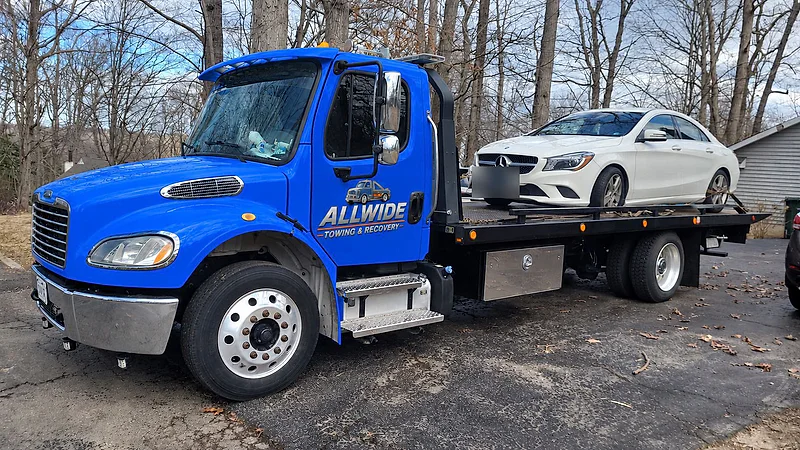
- Flatbed: all four wheels ride on the truck bed. It’s the safer pick for AWD and 4WD vehicles, EVs, lowered or sports cars, and cars with crash damage.
- Wheel lift: a metal yoke cradles the front or rear wheels and lifts that end. The other two wheels roll on the road.
- A wheel lift often works well for front-wheel-drive and rear-wheel-drive cars that just won’t start.
- A wheel lift can reach into parking garages, narrow streets and tight lots where a long flatbed may not fit.
- Many manufacturers recommend towing AWD vehicles and EVs with all four wheels off the ground. Check your owner’s manual.
- Not sure? Tell the dispatcher what you drive, and we’ll send the right truck. Call All Wide Towing & Recovery at (757) 796-4622.
What is the difference between flatbed and wheel-lift towing?
The difference is how many of your wheels touch the road during the tow. On a flatbed, none of them do. On a wheel lift, two of them do.
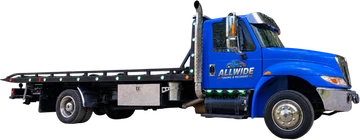
A flatbed tow truck has a long, flat bed that tilts down to make a ramp. The operator winches your car up onto the bed, secures it, and levels the bed back out. Your vehicle rides like cargo, with the drivetrain, tires and suspension resting.
A wheel-lift tow truck uses a hydraulic arm with a yoke that slides under the front or rear tires. The arm lifts that end of the car off the ground, and the other end rolls along on its own wheels. Unlike older hook-and-chain trucks, a wheel lift holds the car by the tires rather than the bumper or frame.
Both are normal, everyday ways to tow. The right choice depends on your vehicle, its condition and where it’s sitting.
Flatbed vs. wheel lift: how do they compare?
Here is a side-by-side look at flatbed vs wheel lift towing on the points that matter most to drivers.
- Vehicles: A flatbed handles nearly any car, SUV, pickup or van within its weight rating. A wheel lift suits many two-wheel-drive cars and light trucks.
- Damage risk: A flatbed keeps the whole vehicle off the pavement, so there is no road wear on the tires or drivetrain. A wheel lift is gentle when it’s used on the right car, but the rolling wheels and drivetrain still turn during the tow.
- AWD and 4WD: A flatbed is usually the safer choice. With a wheel lift, an AWD or 4WD vehicle generally needs tow dollies under the rolling wheels so all four are off the road.
- Tight spaces: A wheel lift wins here. The truck is shorter and doesn’t need room behind it to lower a bed, so it fits into garages, alleys and crowded lots.
- Cost factors: Price depends on distance, vehicle size, the equipment needed and how hard the car is to reach. Ask for the price on the phone before the truck is sent.
Is flatbed towing better for AWD and 4WD vehicles?
Yes, a flatbed is usually the right call for all-wheel-drive and four-wheel-drive vehicles. On many of these vehicles, the front and rear axles are linked through the drivetrain. If two wheels roll while the other two are held still, parts like the transfer case or differentials can be strained.
That matters in Hampton Roads, where AWD crossovers and 4WD SUVs and pickups are everywhere, from family cars in Chesapeake to beach vehicles in Virginia Beach. Many manufacturers recommend towing these vehicles with all four wheels off the ground, so check your owner’s manual for the towing section.
If a wheel lift is the only truck that can reach your car, the operator can place dollies under the rolling wheels. For a longer tow, though, a flatbed towing truck is the simpler, safer option.
Can an electric vehicle be towed with a wheel lift?
In most cases, an electric vehicle should go on a flatbed. When an EV’s drive wheels turn, the electric motor can turn with them, and many manufacturers advise against towing with the drive wheels on the ground.
Many EVs are also heavy, sit low, and have battery packs under the floor, so careful loading matters. Look in your owner’s manual or the manufacturer’s app for towing instructions, and tell the dispatcher it’s an EV when you call. Hybrids can have similar rules, so mention that too.
Which vehicles in Hampton Roads usually need a flatbed?
Any vehicle that could be harmed by rolling on its own wheels, or that sits too low for a wheel lift, usually belongs on a flatbed. Around Norfolk and the rest of Hampton Roads, that typically includes:
- AWD crossovers and 4WD SUVs and pickups
- Electric vehicles and many hybrids
- Sports cars, lowered cars and cars with low front air dams or body kits
- Classic, collector and high-value vehicles
- Cars with crash damage after a wreck on I-64, I-264 or another busy road, especially with a damaged wheel, axle or suspension
- Vehicles with locked wheels, a missing tire or a transmission problem
- Cars being moved a long distance, such as a military family moving a vehicle near Naval Station Norfolk
If you’ve been in a crash, our accident towing page explains what to expect at the scene. For everyday flatbed towing in Norfolk, VA, just call and tell us what you’re driving.
When a wheel lift is the better choice
A wheel lift is the better choice when the car is a good match for it and space is tight. It does the job well for a lot of everyday towing.
Picture a parking garage downtown, a narrow street in Ghent, or a tight block in Olde Towne Portsmouth with cars parked close on both sides. A flatbed needs room to back up and tilt its bed. A wheel-lift tow truck can often pull straight in, pick up the car by its wheels, and drive out.
A wheel lift also works well for:
- Front-wheel-drive cars lifted by the front wheels
- Rear-wheel-drive cars lifted by the rear wheels, or with the driveshaft handled as the manufacturer advises
- Short, local tows to a nearby repair shop
- Pulling a car out of a tight spot so it can be loaded onto a flatbed in open space
Our towing service covers both truck types, so you don’t have to pick one on your own.
Do I need a tow at all?
Not every problem needs a tow truck. A dead battery, a flat tire with a usable spare, an empty tank or keys locked inside can often be handled where the car sits.
See our roadside assistance page for jump starts, tire changes, fuel delivery and lockouts. If the car still won’t run, we can arrange a tow from there.
What to tell the dispatcher
The more you tell the dispatcher, the more likely the right truck shows up the first time. Have these details ready when you call:
- Year, make, model and color
- Whether it’s front-wheel drive, rear-wheel drive, AWD, 4WD, hybrid or electric
- Whether it’s lowered or has a body kit or low bumper
- What’s wrong: won’t start, flat tire, crash damage, locked wheels
- Whether the car is in neutral, and whether the keys are with you
- Where it’s parked: street, driveway, parking garage (and its height limit, if posted), or highway shoulder
- Where the car should go, with the shop or home address
Then ask for the price before the truck is sent, so you know what to expect.
FAQ
Is a flatbed tow always safer than a wheel lift? Not always. For many two-wheel-drive cars on a short local tow, a wheel lift does the job well. A flatbed is the safer choice for AWD, 4WD, electric, low or damaged vehicles.
Will a wheel lift damage my bumper? A wheel lift holds the car by its tires, not the bumper, so it’s much gentler than an old hook-and-chain truck. Cars with very low front ends or body kits are still usually better on a flatbed.
Does flatbed towing cost more than a wheel lift? It can depend on the job. Distance, vehicle size, equipment and how hard the car is to reach all play a part. Ask for the price when you call.
Can I ask for a flatbed? Yes. If you’d rather have a flatbed, or your owner’s manual calls for one, say so when you call and we’ll plan for it.
Can a flatbed get into a parking garage? Many garages are too low or too tight for a flatbed. In that case, a wheel lift can often move the car out to open space first. Tell the dispatcher you’re in a garage.
Have more questions? Read our towing FAQ.
Need flatbed or wheel-lift towing in Hampton Roads?
If you’re not sure which tow truck your car needs, call and we’ll help you sort it out. All Wide Towing & Recovery is based in Norfolk and serves drivers across Hampton Roads.
We tow cars, SUVs, pickups and vans across Norfolk, Virginia Beach, Chesapeake, Portsmouth, Suffolk, Hampton and Newport News, and we’re open every day, day and night. Call (757) 796-4622, or see towing in Norfolk.
Need a tow in Norfolk?
Last updated: