How Much Does a Tow Truck Cost in Norfolk, VA?
How much does a tow cost in Norfolk, VA? It depends on how far your vehicle goes, how big it is, which tow truck it needs, where it’s sitting and whether it needs recovery work first. Because every call is different, ask for the price before the truck is sent.
Quick answer
- Distance: a short local tow is a smaller job than a long trip to another city.
- Vehicle size: light, medium and heavy duty vehicles need different trucks.
- Truck type: AWD, 4WD, electric and damaged vehicles often need a flatbed.
- Location and access: a tight parking garage or an interstate shoulder can change the work involved.
- Recovery: a vehicle in a ditch or on its side needs extra work before it can be towed.
- Ask for the price before the truck is sent, and keep your receipt.
Why don’t tow companies list one flat price?
Because two tows are rarely the same job. A sedan that rolls onto a flatbed in a Norfolk parking lot and goes two miles is a different call from a box truck stuck off a ramp on I-464.
The truck, the time and the equipment all change with the vehicle, the location and the destination. That’s why the most useful thing you can do is give the dispatcher clear details and ask for the price on the phone, before anyone is sent.
How does distance affect the cost of a tow?
Distance is one of the main factors. A tow to a shop a few miles away is a shorter job than a tow from Norfolk to Suffolk, Newport News or another city.
Know the destination address before you call. If you don’t have a shop yet, ask about your options, such as towing the car to your home first.
Crossing the water adds miles and time. A tow from Norfolk to Hampton goes through the Hampton Roads Bridge-Tunnel on I-64, and closures can push the route onto the Monitor-Merrimac Memorial Bridge-Tunnel on I-664. Check 511, VDOT’s traveler information line, if you’re planning around a closure.
Does vehicle size change the price?
Yes. Bigger vehicles need bigger trucks. Light duty vehicles, such as cars, SUVs, pickups and minivans, go on a standard flatbed or wheel lift truck.
Medium duty vehicles, such as box trucks, work trucks, RVs and larger vans, need a heavier truck. Heavy duty vehicles, such as large trucks and commercial vehicles, need a wrecker built for the weight.
Tell the dispatcher the exact vehicle and anything it’s carrying or pulling, so the right truck comes the first time.
Flatbed or wheel lift: which tow truck does my car need?
Your vehicle’s drivetrain and condition decide the truck, and the truck affects the price.
- Flatbed: carries the whole vehicle with no wheels on the road. Many car makers say AWD and 4WD vehicles should be towed this way, and it suits electric vehicles, low cars and crash-damaged vehicles.
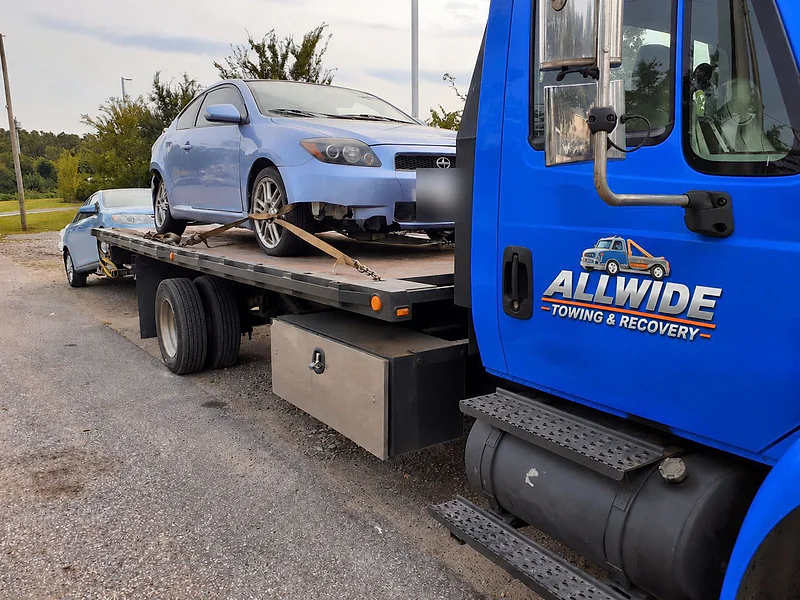
- Wheel lift: lifts one end of the vehicle and works for many two-wheel-drive cars that can roll safely, especially in tight spaces.
- Wrecker or boom truck: used for larger vehicles and for recoveries.
If you’re not sure what your car needs, give the year, make and model and the dispatcher will tell you.
What makes a recovery different from a tow?
A recovery is the work needed to get a vehicle back onto solid ground before it can be towed, and it takes more time and equipment than a simple hook-up.
A car on level pavement is straightforward. A car in a ditch, stuck in mud or sand, down an embankment or on its side may need winching or a boom truck. Describe exactly how the vehicle is sitting when you call, so the price you’re quoted reflects the real job.
Do I need a tow, or is roadside assistance enough?
If the car isn’t damaged, you may not need a tow. A dead battery, a lockout, a flat with a usable spare or an empty tank can often be handled where you are with a jump start, lockout service, a tire change or fuel delivery.
Describe the symptoms clearly. If the car won’t start, say whether it clicks, cranks or does nothing at all.
Will my insurance or roadside plan pay for the tow?
It might. Many auto policies and roadside plans include some towing, but what they cover varies. Call the number on your insurance card or check your plan, and keep your towing receipt so you can ask for reimbursement.
Are private-property towing fees the same thing?
No. When a car is towed from a parking lot without the owner’s consent, that’s a non-consent tow, and Virginia law treats it differently.
Code of Virginia § 46.2-1233.1 sets default limits on non-consent towing fees unless a local ordinance sets its own, and § 46.2-1231 covers removing trespassing vehicles from private lots. Those rules cover tows the owner didn’t ask for. They aren’t a guide to the price of a tow you call for yourself.
What should I tell the dispatcher to get an accurate price?
Clear details help the dispatcher give you an accurate price:
- Where the vehicle is: a street address, or the interstate, direction and nearest exit
- Year, make and model, and whether it’s AWD, 4WD or electric
- Whether it rolls, steers and brakes, and whether you have the keys
- What happened: won’t start, crash damage or stuck off the road
- The destination address
Then ask for the total price, and whether anything could change once the driver sees the vehicle.
Get a price for a tow in Norfolk and Hampton Roads
Call All Wide Towing & Recovery at (757) 796-4622 with your location, vehicle and destination, and ask for the price before the truck is sent. We’re based in Norfolk and tow across Norfolk, Virginia Beach, Chesapeake, Portsmouth, Suffolk, Hampton and Newport News. We’re open every day, day and night.
Need a tow in Norfolk?
Last updated: